Search

Trip Database Blog

Liberating the literature

Author

jrbtrip

The first 24 hours

Its been 24 hours since the new, Freemium, version of Trip went live.  A few things I’ve learnt:

  • People have not been openly hostile about us moving to the new business model, I was expecting some abuse. I got some mild complaints from Twitter – but if that’s the worst of it.
  • People seem happy to pay and we have a number of paying customers.  Before we went live I was trying to think what might be good, bad and terrible and couldn’t actually come up with anything sensible.  However, the response so far has been encouraging.  But, I do need to stop checking the payments system every hour.
  • Institutional interest has exceeded expectations and it’s been really interesting dealing with many of the queries.
  • Internet Explorer (version 8) is not liked by Stripe, our payment system.
  • The system to reset passwords was a bit naughty and refused to send out links to reset the passwords.  Fortunately, that is now fixed!
  • I’m beginning to better understand some of the background functionality that I’d been not really thinking about.
  • I really need to think about VAT when setting up a payments system.

I think the biggest realisation is that, to make this model work, will require significant hard work on my part!  Anyone out there with (a) good sales skills (b) spare time (c) will to work on payments by results??

The New Trip Database

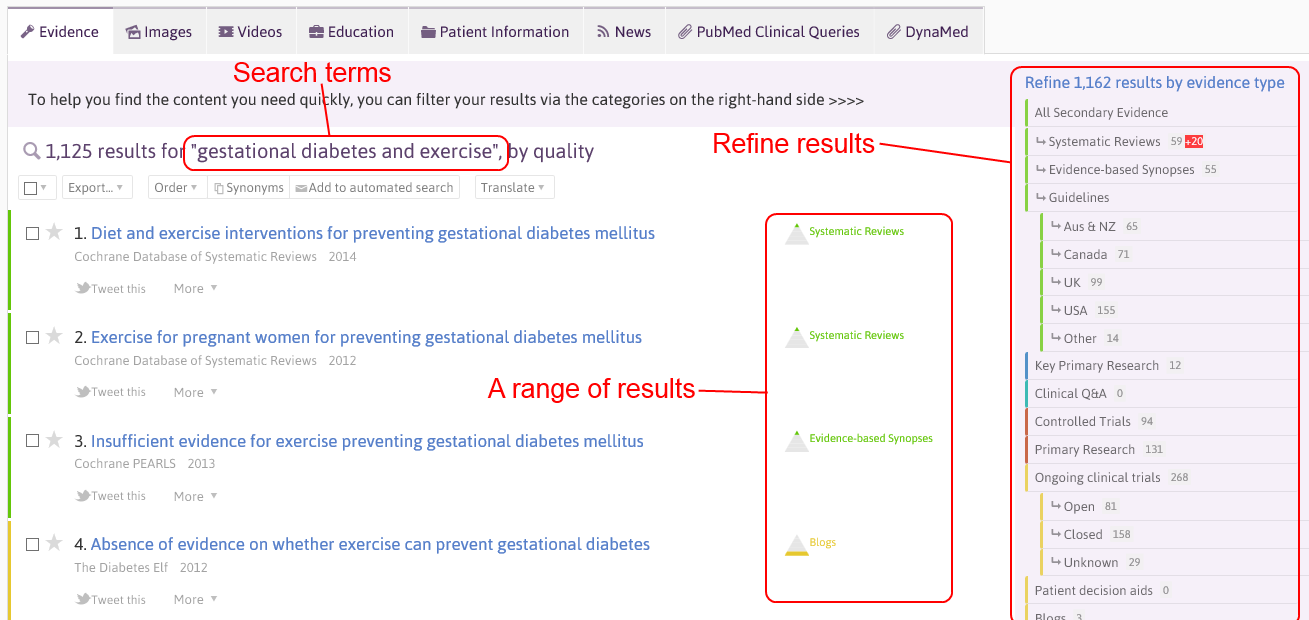
The new version of the Trip Database is live and to help celebrate we’ve produced a beautiful infographic.

While to many the new site will not look massively different there have been some huge changes.  Perhaps the biggest has been the adoption of the Freemium business model.  What was previously freely available at Trip remains, largely, free but for those who want an enhanced service there is a Premium (paid for) service.  We have adopted this model based on the absolute need for financial security. 

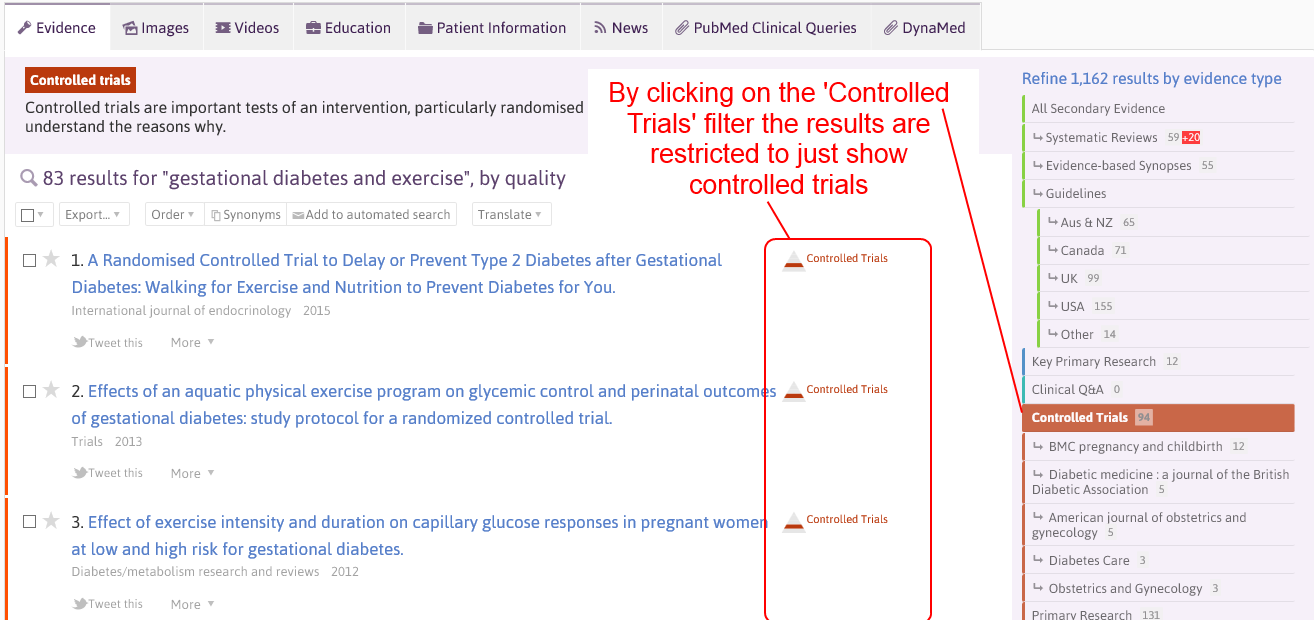
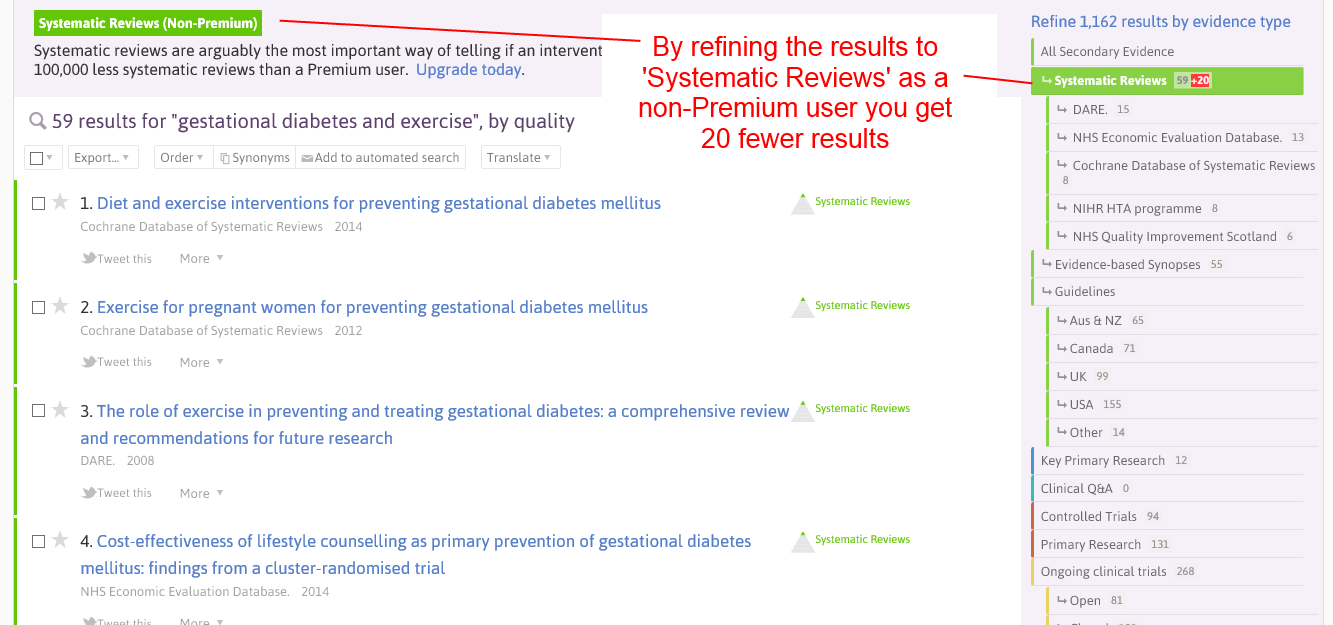
So, what do those purchasing the Premium model get?

More content

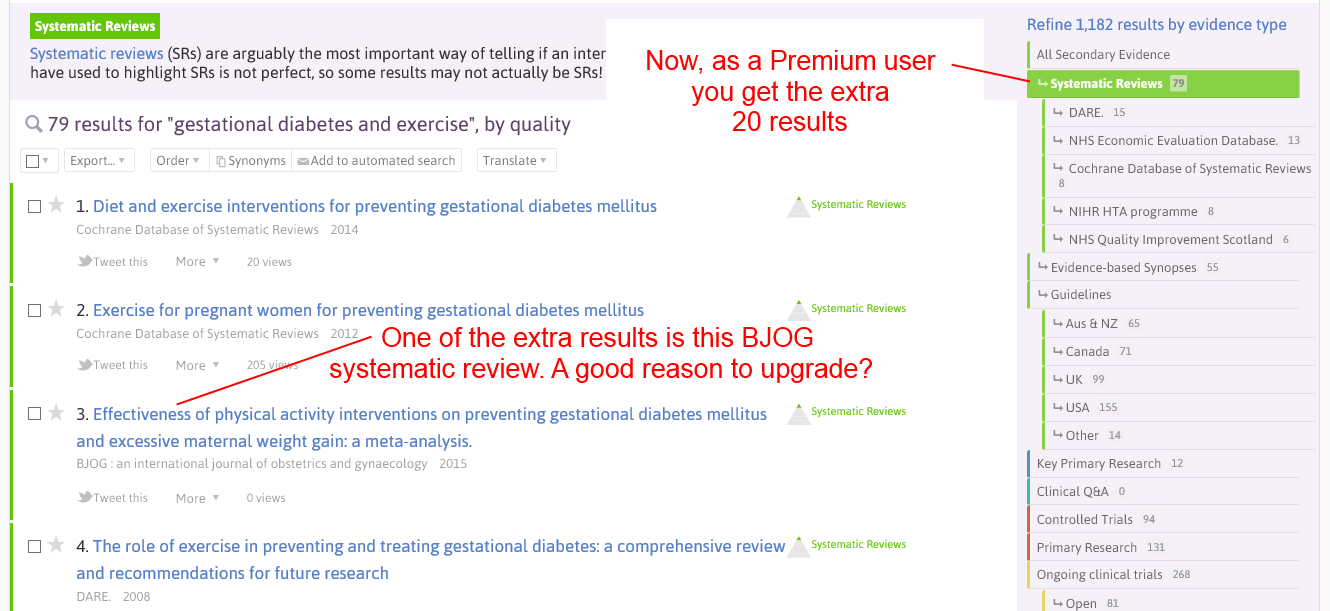
  • Approximately an extra 100,000 systematic reviews (including systematic review type content such as HTAs), more than double available via the free Trip.
  • Millions of free full-text articles
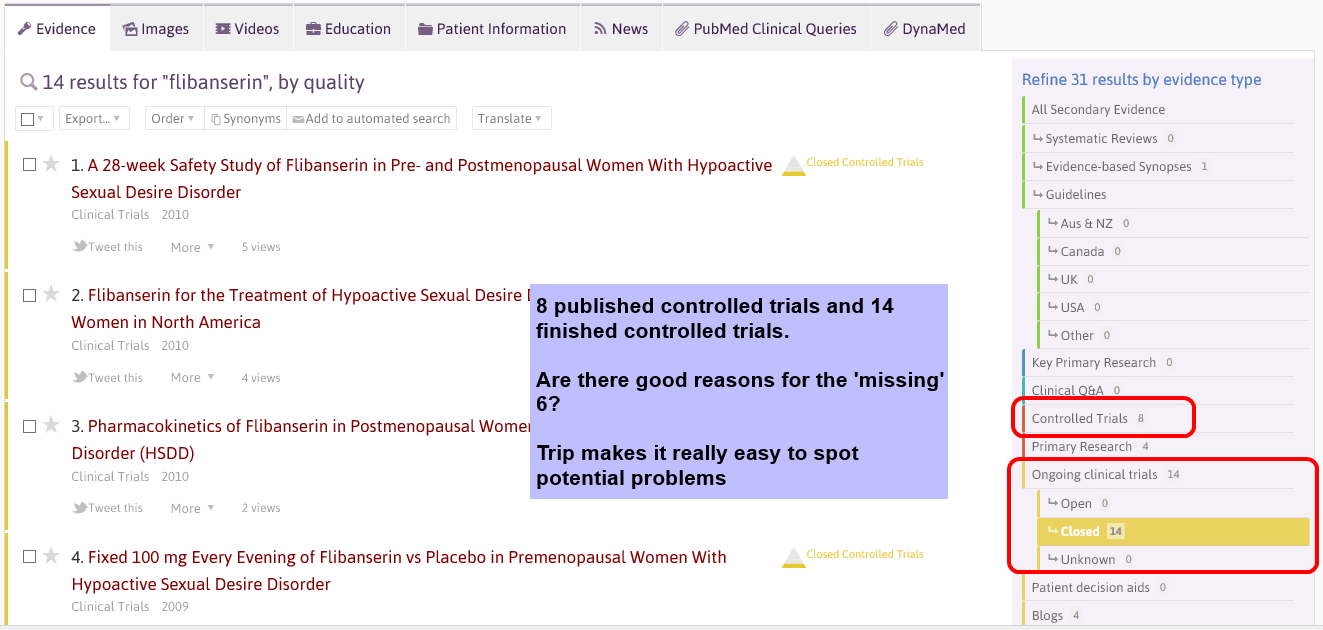
  • Ongoing clinical trials database of over 175,000 clinical trials
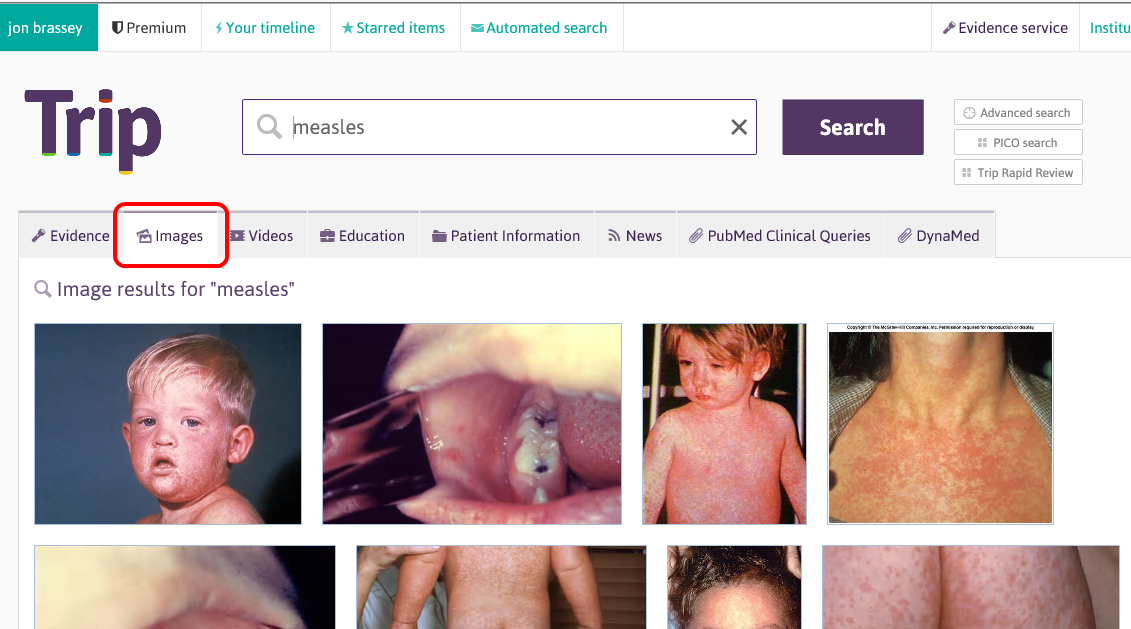
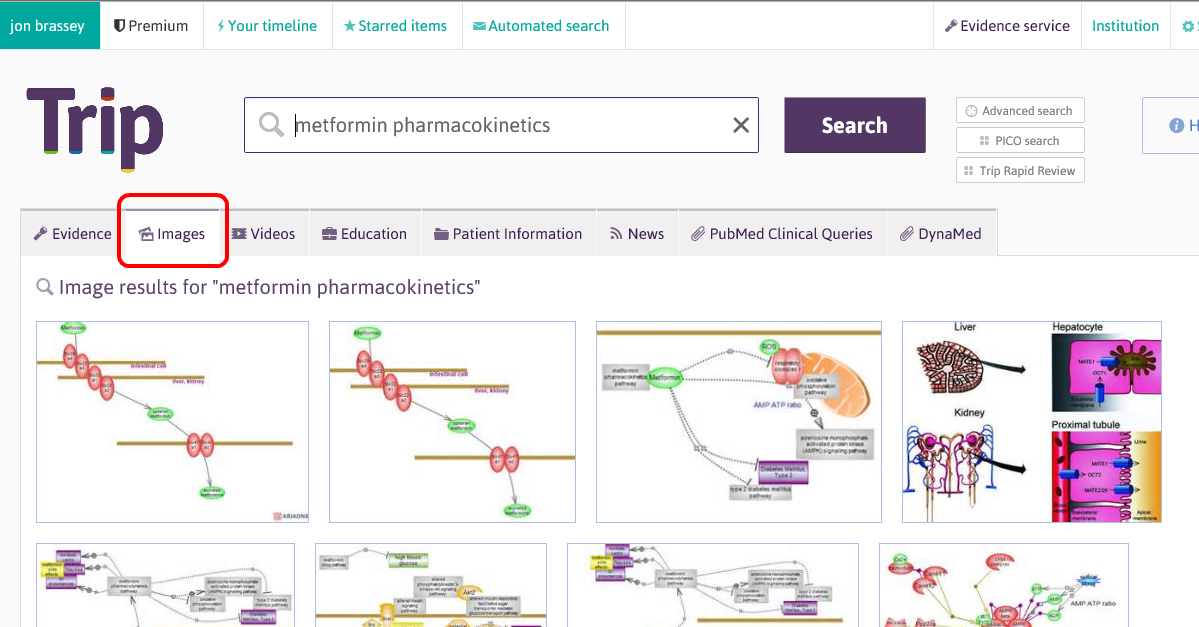
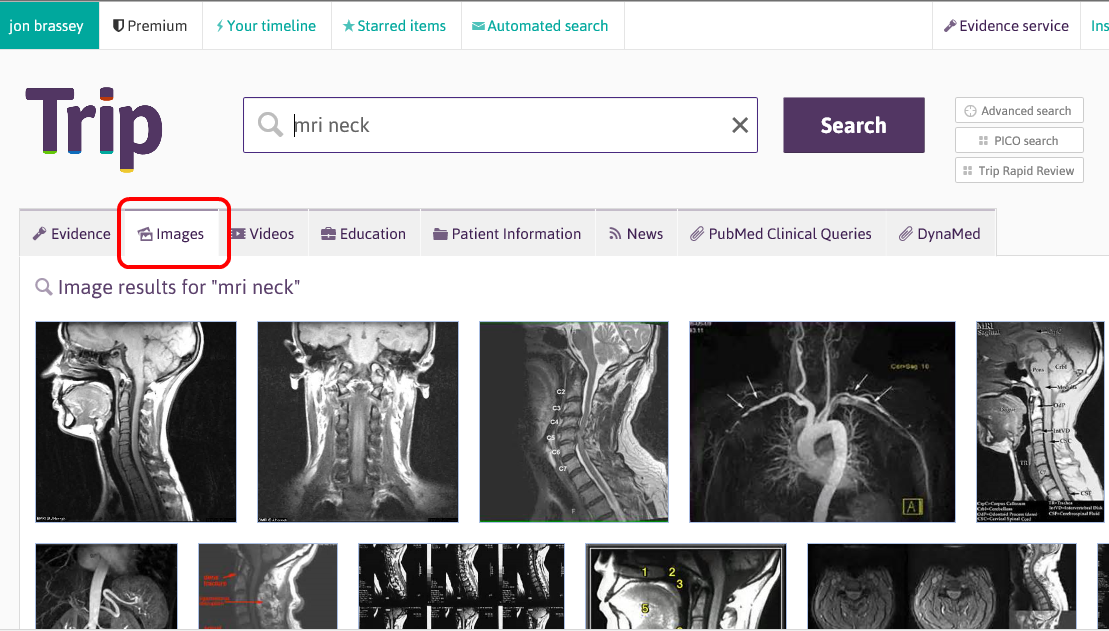
  • Access to a large medical image database
  • Tens of thousands of clinical videos

More functionality

  • Export of records to reference management software
  • The ability to easily exclude certain content types (e.g. eTextbooks)
  • Trip educational credits
  • Article views, see which articles are most popular for your search

Other things

Another new feature is moving to a more secure site with a new password system (this is for both free and premium users).  This will require users to renew their login/password details but it’s a one-off – so hopefully not too traumatic.

Finally, and mentioned above, is the new Trip Evidence Service. Run by experienced and skilled information experts the Trip Evidence Service can provide various services: formal literature searches, horizon scanning and evidence reviews. Given the varied staff skills the service can also offer bespoke information services.

So, why delay, click here to upgrade to the new Premium Trip today (click here).  NOTE: Institutional subscriptions are available,

Coming soon

We’ve moved in to the final stages of testing for the new site.  If you’ve not seen it already, we posted a ‘taster’ around ten days ago. Assuming the testing goes well, we aim to go live over the weekend of the 16/17th May.

As well as the upgrades we’re moving to a new and more secure site.  The only thing you’ll notice is the need to change your login and password.  This is a necessary ‘discomfort’ as the old system was very old and not particularly secure, so there was a pressing need to upgrade!

This is a really important milestone for Trip.  Assuming it goes well and a reasonable number of users (and organisations) sign-up to we will be financially stable – the first time in years.  It should give us a solid foundation to base on next tranche of improvements – based on the work highlighted in this blog post.

Dental evidence

As part of a wider piece of work I’ve been looking through the search logs and clickstream data associated with the dental specialty.  It’s interesting, and the following information is based on the 1,100+ registered users on Trip who have ticked the clinical specialty of dentistry. 

Top twenty search terms, most frequently used at the top

  • caries
  • gingivitis
  • periodontitis
  • dentistry
  • orthodontics
  • dental caries
  • dental implants
  • restorative dentistry
  • periodontal disease
  • oral cancer
  • Caries Risk Assessment
  • Medical errors
  • dental public health
  • fluoride
  • hypnosis
  • dental materials
  • endodontic outcome
  • pit and fissure sealants
  • pediatric dentistry
  • Patient Safety

And the top twenty articles are as follows:

  1. Pregnancy and gingival inflammation – Dental Elf
  2. Patients with Amalgam Restorations Are Not at a Significantly Greater Risk for Developing Health Complications Than Those With Composite Restorations – UTHSCSA Dental CATs
  3. The Use of Dental Crowns for Vital and Endodontically Treated Teeth: A Review of the Clinical and Cost-Effectiveness and Guidelines – CADTH
  4. Dental interventions to prevent caries in children – SIGN
  5. Dental Implants and Conventional Prosthetics: Comparative Clinical Effectiveness and Safety – CADTH
  6. Composite Resin and Amalgam Dental Filling Materials: A Review of Safety, Clinical Effectiveness and Cost-effectiveness – CADTH
  7. Conscious (Moderate) Sedation Can Be Used Safely On Patients With Obstructive Sleep Apnea – UTHSCSA Dental CATs
  8. Diagnosis and Treatment of Obstructive Sleep Apnea in Adults – AHRQ
  9. 12-Year Survival of Composite vs. Amalgam Restorations – J Dent Res.
  10. Methods of Diagnosis and Treatment in Endodontics – SBU
  11. A Randomized Clinical Trial Comparing At-Home and In-Office Tooth Whitening Techniques: A Nine-Month Follow-up – J Am Dent Assoc.
  12. Composite resin and amalgam dental filling materials: a review of safety, clinical effectiveness and cost-effectiveness – NHS CRD (HTA record of number 6 above!)
  13. Fluoride varnishes for preventing dental caries in children and adolescents – Cochrane
  14. Community Water Fluoridation in Canada ? Trends, Benefits, and Risks – National Collaborating Centre for Environmental Health
  15. Flossing for the management of periodontal diseases and dental caries in adults – Cochrane
  16. Interventions for replacing missing teeth: antibiotics at dental implant placement to prevent complications – Cochrane
  17. Oral Appliance Therapy and Continuous Positive Airway Pressure Demonstrate Similar Improvements in the Treatment of Mild/ Moderate Obstructive Sleep Apnea – UTHSCSA Dental CATs
  18. Cost-effectiveness of a long-term dental health education program for the prevention of early childhood caries – NHS EED
  19. Prosthetic rehabilitation of partially dentate or edentulous patients – SBU
  20. Primary clinical care manual (7th edition, 2011) – The State of Queensland (Queensland Health) and the Royal Flying Doctor Service (Queensland Section)


Evidence Live, systematic reviews and the US Air Force

I’m just back from the wonderful Evidence Live.  While I was away I saw this news story Is the West losing its edge on defence? and I was particularly drawn to the following passage:

The military have also contributed to their own misfortunes by conspiring with defence contractors to build ever more expensive weapons that can only be afforded in much smaller numbers than those they are supposed to replace.

Pierre Sprey, chief designer on the F-16 fighter noted the ruinous consequences of buying stealth aircraft at hundreds of millions of dollars a copy.

“It’s a triumph of the black arts of selling an airplane that doesn’t work,” he said.

This fits in very nicely with my perspective on systematic review methods, and was one of the main threads in my presentation on the future of evidence synthesis.  The current methods of systematic review production are costing way too much for what they deliver.  If you consider that the majority of systematic reviews rely on published trials they are inherently unreliable.

In the EBM world we’re buying F-16s…!

More to follow on this theme.

UPDATE: The wonderful Anne Marie Cunningham has pointed out (see comments) has pointed out that the consequence is of buying the really expensive stealth fighters (not F16s).  That’s a consequence of rushing a blog post so soon after a vigorous conference!  The point remains – purchasing too expensive planes has caused massive problems. 

A taste of things to come

It is hopefully self-explanatory…

NOTE: click to enlarge

The important breakthrough

Trip has been operating for over 15 years and I can easily say we have arrived at the most significant breakthrough yet.  It is still in our ‘labs’ section and still has much work to do before being rolled out.  But, the path is clear and, finance aside, there is no reason why we can’t produce a significant increase in search performance.

In search a really important concept is intention.  So, when a user searches they may add 2-3 search terms but what are they thinking about when they use those terms?  For instance, and this is a true story, I showed Trip to a Professor of Anaesthesiology  and asked for his views on the site.  He came back saying that he was unimpressed!  The reason – his interest was in awareness (as in, when a person is under anaesthetic are they truly anaesthetised or may they be aware) and when you search Trip for awareness you get lots of results, mostly on things like the awareness of public health messages! Another example I use to illustrate the point is the search pain.  We return the same results whether the person is an oncologist or a rheumatologist – which to me is ridiculous – as the intention is likely to be significantly different.  But, to date, there has been no good solution.

The below image (click to enlarge) shows a breakthrough.

In the image above there are 4 sets of results for the same search antibiotics.  This is a test system and not based on the real Trip results.  However, on the left-hand side we have the normal/natural results for the search antibiotics in the test system.  In the top right set of results the natural results have been reordered based on the clickstream activity of the users of Trip, those who have not logged in (85%).  At the simplest level this promotes results that have been clicked on and relegates those that have not been clicked.  It really is more complex than that – but I hope you get the point!

But the bottom right is where the magic it.  Even though it only accounts for 0.2% of the activity, we have reordered the results based on the clickthrough activity of dentists.  There are a few erroneous results, but I’d like to think you can see the effect – dental articles are promoted.

So, the effect of this is that – when we eventually roll out the system – and we know the user is a dentist we improve their results based on the previous activity of other dentists.  The reality is that this technique will work with any speciality and profession.

There are a few issues, the paucity of data is the biggest and we have two significant ways of tackling this:

  • When we roll out the new Trip we will – to a large extent – make login/registration obligatory.  This will mean we get lots more clickstream data which will make the results even better.
  • Machine learning.  We’ve already worked on machine learning and will bring these techniques to the system to enhance/compliment the clickstream work.

Oh yes, we’ve even figured out a way to mitigate the effects of filter bubbles.

This really has been a good few weeks.

The light at the end of the tunnel…

…is, I hope, not the light of an oncoming train. I’ve nabbed that line from my favourite band – Half Man Half Biscuit (HMHB) who wrote The Light At The End Of The Tunnel (Is The Light Of An Oncoming Train) a good few years ago! My love for HMHB aside, I keep reflecting on how things seem to be going really well for Trip and I’m desperately hoping we’ve turned a corner.  So, why the optimism:

  • 2014 was pretty good.
  • We’re working on the new Freemium version of Trip.  What’s going to come out is going to be impressively good and some of the premium upgrades will be great.
  • We’re involved in the really interesting EU funded project which will be doing some really innovative things.  I’ll blog about that more when the final specifications are agreed, but we’ll be looking at making Trip more multi-lingual, we’re going to be improving the Trip Rapid Review system and loads of work around similarity which is useful for the next point.
  • Relatedness/similarity is looking very useful for what we want to do with regard developing our financial viability.  The measures we’re developing will allow us to do all sorts of interesting things, for instance we can highlight a new book that’s useful to a particular clinician, we can highlight a new trial that’s pertinent to an existing systematic review.  Many more uses on top of that, but I’ve got to keep some secrets.
  • I’m starting to realise the value in our clickstream data (helped by two separate teams and soon to be joined by a PhD student as part of the EU project).  You only have to look at most of this year’s blog posts to see I’m working hard on this.  This can help with the relatedness work but it can do other useful things, such as improving the search results and better predicting new articles that are of use to a Trip user.  If our mission is to ensure health professionals get the right evidence to support their care – using clickstream data will make it so much more effective.  The advantage of the clickstream data is that it’s Trip’s data to utilise, it’s our IP.  It’s at the heart of our future.  I actually think it’s this point that’s making me so happy/optimistic.
  • Lots of other nice bits and bobs e.g. I’ve just been invited to lecture in the USA in Autumn/Fall; I’m part of a large consortium bidding to be a support team for complex reviews; I’m presenting at the wonderful Evidence Live; I’m making headway in my new NHS job (I am lead for Knowledge Mobilisation for Public Health Wales); I’m waiting to hear about a large MRC grant (not optimistic but something to look forward to).

Long may this continue!

Blog at WordPress.com.

Up ↑