Search

Trip Database Blog

Liberating the literature

Month

September 2024

Presenting the latest evidence…

There is a huge amount of research and evidence published daily, far too much to keep up with. This is an issue we, at Trip, have wrestled with for years. With the advent of LLMs we’re experimenting with a new approach.

Using Primary Care as a launch pad we’re creating a ‘Latest evidence’ review (or is it a digest?). Here are some screengrabs of our test:
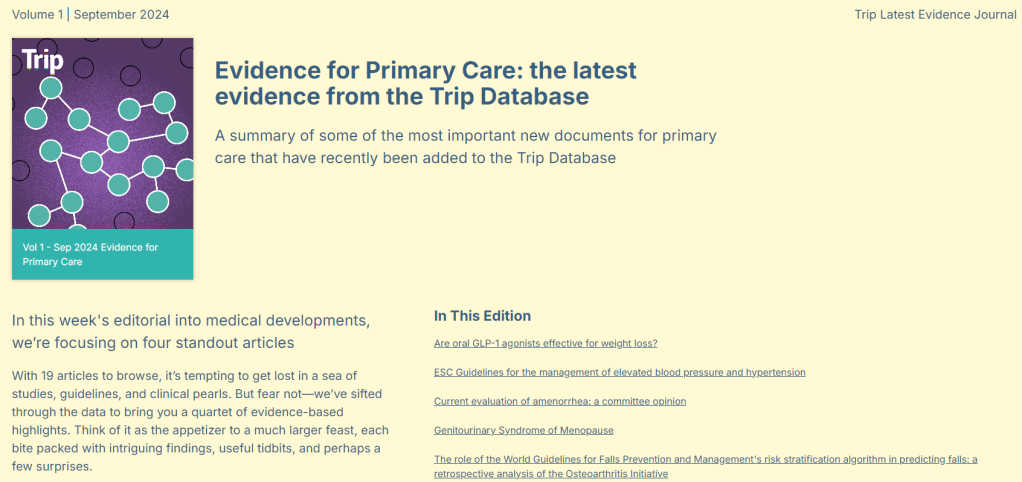
Note the ‘September 2024’ which indicates it’ll be monthly. On the left hand side is an ‘editorial’ (LLM generated) and on the right is a list of articles we’re covering. If you scrolled down further you get:
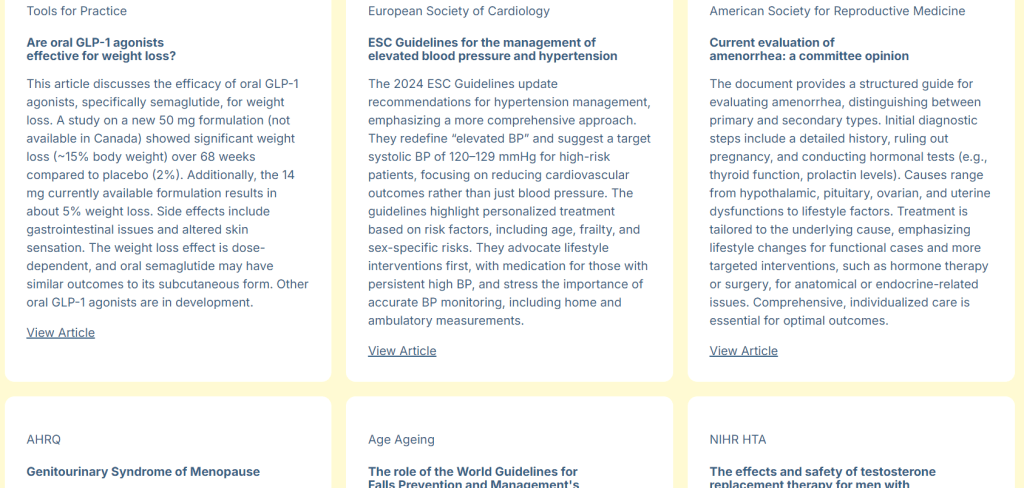
We’re displaying a summary (LLM generated) and a link to the article.

Currently this is semi-automated and when we release it we’ll run it for a few months to see the reaction. If it’s favourable we’ll almost fully-automate it and make it available for multiple clinical areas e.g. oncology, cardiology, rheumatology. etc

Given the focus on quality at Trip we will only report high-quality evidence, much of which is ‘grey‘, hence not published in journals and therefore less likely to be seen. Given the lack of visibility for much of the content it makes this sort of promotion really important; let’s see how this approach is received by our users…!
Systematic reviews in Trip – over 550,000!

Systematic reviews are an important component of evidence-based medicine. Over the years we have attempted to support our users by finding as many systematic reviews as possible. Recently we have been lucky enough to work with a number of organisations and start-ups who have helped us find more. And, I’m delighted to say that, as of today, we have 564,350 systematic reviews in Trip.

We compared our coverage with a number of other databases, for example PubMed, and we consistently have more. To compare we used title searches (to overcome the differences between searching mechanisms between databases – something that shouldn’t affect title searches) and here are some examples:

Zinc

  • 528 results for Trip
  • 286 results for PubMed (using SR filter)
  • 19 in the Cochrane Library

 Cancer screening

  • 1890 for Trip,
  • 646 for PubMed
  • 19 for Cochrane

One advantage Trip has is that we also include health technology assessments (HTAs). These are often ‘grey’ and therefore don’t appear in most databases (which typically rely on journal publications).

One final thought, having more systematic reviews is something we’re pleased about, but it’s only part of the story. We introduced our guideline scoring system as many guidelines were not evidence-based and we want to help our users understand this fact. The same is true with systematic reviews, some are better than others. So, we’re restarting our work on automatically assessing the quality of systematic reviews. From our previous work (see here) we had a good system, not a great one. With the advent of LLMs we should be able to improve things considerably – watch this space.

Mis-spelling now live

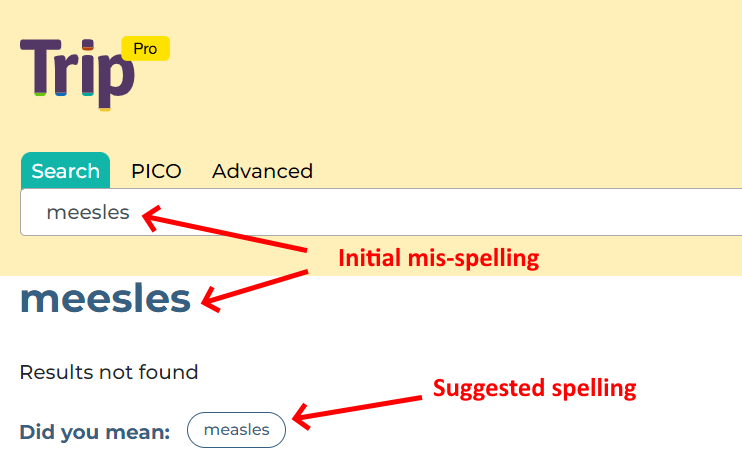
We have now released the mis-spelling feature. It’s pretty simple:

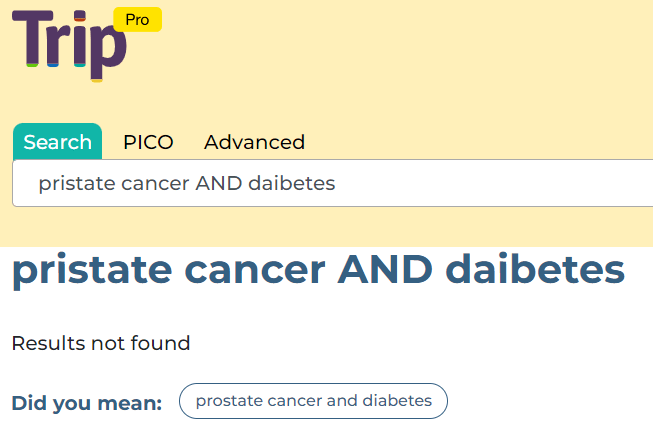
Simply click on the suggested spelling and it repeats the search with the corrected term(s). It can handle multiple terms as well:

Blog at WordPress.com.

Up ↑