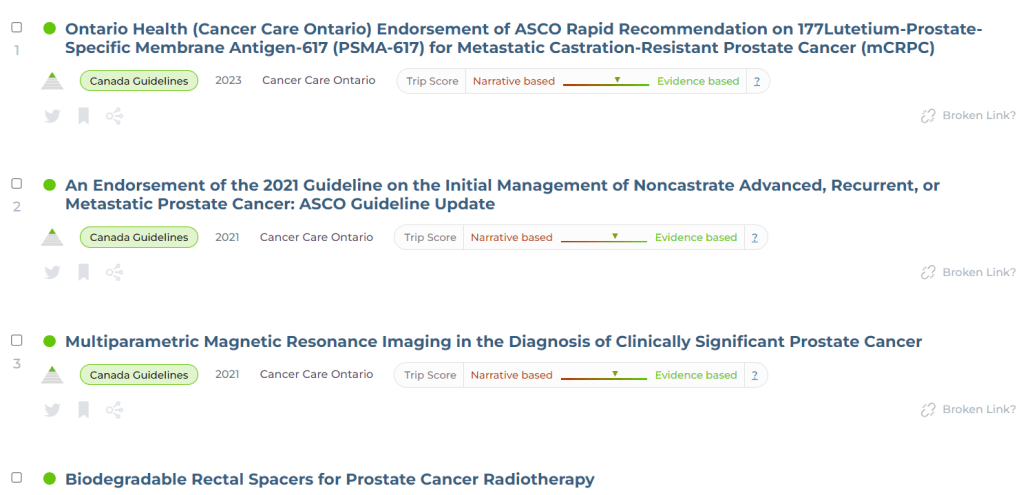
We’re edging ever closer. As you can see from the latest screengrab we’re close:

The actual search works well just a few design issues we need to work out. But I’d say we’re 99% there 🙂
We’re edging ever closer. As you can see from the latest screengrab we’re close:

The actual search works well just a few design issues we need to work out. But I’d say we’re 99% there 🙂
Trip is on the cutting edge, leveraging the transformative power of Artificial Intelligence, with a spotlight on sophisticated large language models (LLMs) like ChatGPT. You might have seen some of our recent forays: LLMs and Clickstream, LLMs again…. and More experiments with LLMs/ChatGPT.
As the AI landscape evolves at lightning speed, we recognise the significant potential of AI to help us deliver for our users. This is where the AI Innovation Circle comes into play – an informal group designed to strategically steer our AI journey to enhance user experience on Trip.
What will the AI Innovation Circle do?
Engagement is not anticipated to be arduous and is likely to be managed via the convenience of email and the dynamic spark of occasional Zoom or Google Meets sessions.
Ready to be at the forefront of AI-powered transformation? Reach out to jon.brassey@tripdatabase.com to shape the future of Trip with us!
NOTE: The above was written by ChatGPT (including the group name) after I gave it a rough draft. Not 100% my sort of wording, but in the spirit of the technology I’m going to go with the flow!
Connected articles launched at the weekend and we’ve explained how it works here. But this blog is more about why we’ve introduced it and the benefits.
Every time you search and click on an article the system starts to ‘understand’ your interests. This is important as it can be very difficult to convey, via a handful of search terms, what your intention is. In search, user intention is vitally important. Two users might both search for the same thing e.g. prostate cancer screening yet one is interested from the public health perspective while the other might be interested in the best test to use.
However, while search terms might hide the intention user’s clicks quickly ‘reveal’ their actual intention by clicking on document that they feel might answer the question they have. So, a public health search might click on articles that discuss the cost-benefit of screening at a population level. While someone else might click on articles comparing PSA to DRE.
The Secret Sauce: Co-Clicks, Semantics, and Citations
So, what makes Connected articles so clever? Three words: co-clicks, semantics, and citations.
Our system takes the data available from the above sources and combines them using a special algorithm to ensure the most closely connected appears top.
Ok, so why should you care?
An example of using Connected articles
Using a search for urinary tract infections we clicked on three articles on a similar topic (can you guess what that might be?) below are the top 6 results, but you can scroll down through the results and see many more:

And the topic, I’m sure you can see it’s concentrated the results down to cranberry juice and UTIs!
Convinced? Curious? Sceptical? Give Connected articles a try and tell us what you think. Find an unexpected article that delighted or surprised you? Share it with us! We want you to be delighted!
NEW: Watch our explainer video.
Connected articles is a system that is designed to find articles similar or linked to articles a user has already clicked on. This can be incredibly useful as users often search in an imprecise way and if they only look at a page or two of results they may miss some important articles. Connected articles looks for connections between document and helps unearth hidden/missed gems!
Connected uses three sources of information to find the connections:
We take these three types of connections and combine them, using a special algorithm, to create a list of results. Those deemed most closely connected – using all three sources – appear at the top:

NOTE: Free users of Trip only see the first three results. Pro subscribers get no such restriction.
We are planning on releasing our Connected articles feature on Sunday.
Connected articles is an amazing tool to unearth closely connected articles to the articles a user has already clicked. It uses three types of connection data:
For every article opened by a user we look for connections from any of the three sources mentioned above. These are then algorithmically combined and presented to the user. The results will look like this:

We’ve been working on the advanced search for a while now and it has undergone one round of testing in an un-designed format. Based on feedback we’ve arrived at something like this:

The bottom half is where you build individual lines of queries and these appear at the top of the page. You then combine them using the AND, OR and NOT commands.
What do you think?
After the recent post, asking for volunteers, we have had a number of users testing the advanced search. We have finished analysing these and most of them relate to design and usability. This is good news as it means things will probably move more quickly (as no massive debugging operation is needed).
So, we will shortly pass the feedback on to our designer and after that we can deploy. Hopefully this will be by early November.
This is really interesting. We’re busy looking at ways of using the power of LLMs to improve the user experience on Trip. One recent set of experiments relates to automated evidence reviews. While the following was semi-automatic it it is entirely possible to fully automate this. The review was exploring Brexpiprazole in schizophrenia and the overall report was three pages long and this included asking the system to generate both a conclusion and a clinical bottom line:
Clinical bottom line: Brexpiprazole shows efficacy in treating schizophrenia with most randomized controlled trials reporting it as ‘effective’, especially at non-low doses. However, its effectiveness compared to certain other antipsychotics can vary, and further studies are needed to assess its cognitive benefits.
Conclusion: Brexpiprazole’s efficacy in treating schizophrenia has been studied in several contexts. A systematic review from 2022 has raised concerns about the efficacy of low-dose brexpiprazole as it was not found to be superior to placebo or standard-dose brexpiprazole. However, another systematic review from 2023 suggests that while brexpiprazole may be less effective than a specific dose of lurasidone (160 mg), it generally demonstrates comparable efficacy and safety to both lurasidone and cariprazine.
Guidelines have noted some promising indications of brexpiprazole’s efficacy on cognitive performance in the context of second-generation antipsychotic compounds. Still, they have highlighted the need for further studies to accurately evaluate the extent of such benefits.
Randomized controlled trials (RCTs) have provided mixed but mostly positive feedback. The majority of the RCTs mentioned rated the effectiveness of brexpiprazole as ‘effective’. Notably, these trials reported consistent improvements in PANSS scores, maintained improvements over time, and a favorable side-effect profile. Only one RCT gave a ‘neutral’ rating, mainly due to mixed findings and potential bias introduced by the known side effects of an active reference.
Taking into account the weight typically given to systematic reviews and guidelines, the evidence suggests that brexpiprazole has some efficacy in treating schizophrenia, especially when not considering the low-dose. However, its effectiveness compared to some other antipsychotic compounds may vary, and further studies are recommended to determine its full range of benefits, especially in cognitive performance.
This is amazing technology and we’ll continue to test the capabilities.
We have just pushed out the revamped Advanced Search onto our test site:

We’re testing it in-house but are keen to get some external users to test it. So, if you are interested please contact me via jon.brassey@tripdatabase.com.
Recent Comments