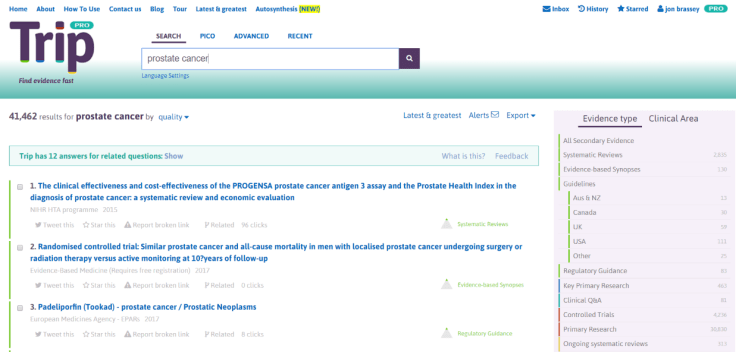
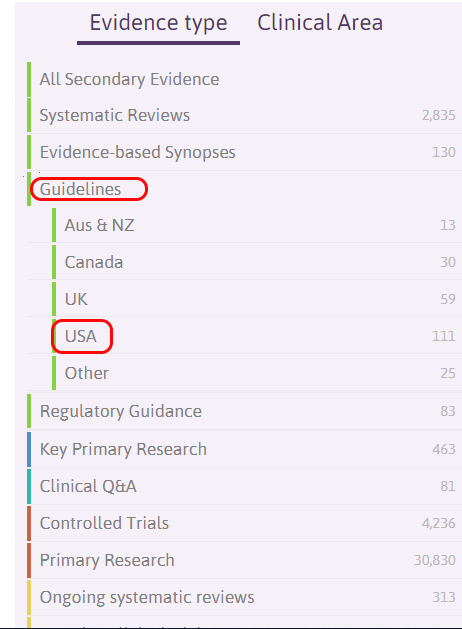
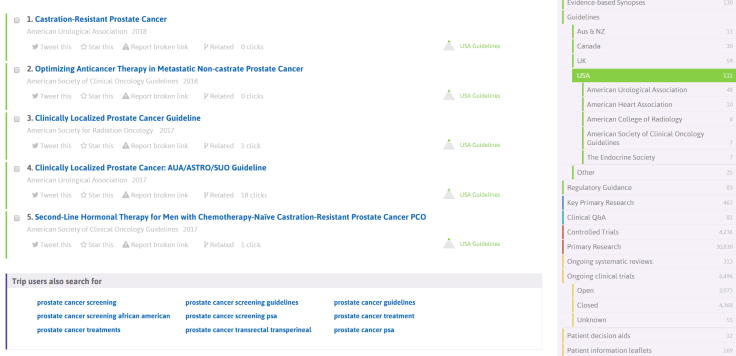
Search

Trip Database Blog

Liberating the literature

Incorporating MeSH in Trip

MeSH (full name Medical Subject Headings) is a controlled vocabulary that is widely used in medical information systems.  We’re actively exploring using it in Trip as we believe it can significantly improve our search results.

As far as I can tell it will improve them for two main reasons.  Firstly, it’ll improve our synonyms function as MeSH is great for that.  Secondly, and this is the most exciting aspect for me, is that MeSH is hierarchical. If you do a search for arrhythmia that maps to the MeSH concept of Arrhythmias, Cardiac:

From the image you can see that Arrhythmias, Cardiac is classed as a pathological condition (as you look up the hierarchy).  But as you go down the hierarchy you can see other terms such as atrial fibrillation, tachycardia, long QT syndrome etc.

This is important as by using MeSH in Trip a search for arrhythmia will also return results for atrial fibrillation, tachycardia, long QT syndrome.

No time frame for this work. But we’re starting investigating the various systems we require, namely:

  • Annotating articles in Trip that currently don’t have MeSH terms assigned. This will need to be automated but there are already good systems to do this.
  • How might it interact with the keyword searches our site currently uses? We need to figure out how MeSH might fit in with our current system.

I’m optimistic that this is not a massively complex piece of work – but we’ll have to see. If you think this would be useful feel free to send:

  • Encouragement (which will help speed things up)
  • General advice
  • Ways you’d like to see it used
  • Ways you’d not like to see it used


Guidelines on Trip – moving forward after the demise of NGC

I recently wrote about the demise of the National Guideline Clearinghouse (NGC).  At the time it was fairly bad news as, by them aggregating the guidelines from multiple guideline publishers, it saves us considerable resource.  However, every cloud has a silver lining!  The NGC was not without challenges, for instance:

  • It takes time to translate a guideline into one of their summaries – so it’s not as up to date as it could be.
  • It seems to withdraw the summaries after 5 years.  This, seemingly, arbitrary cut-off means they withdraw guidelines which the producer still has them listed on their sites.

So, what are we doing about it:

  • We have gathered our own collection of guidelines from the USA.  We have found nearly 3,000 guidelines, considerably more than the 1,342 guideline summaries have on their site (as I type this).  These are not live yet as we’ll need to transition over, but that will happen soon.
  • We have refreshed our other collections and identified around 15 guideline publishers from around the globe that we have previously not included.
  • Put this all together and it will cement our place as the leading source of guidelines.
  • As well as featuring them in the main Trip search we are currently planning a separate guideline site, watch this space.

A massive amount of hard work, but it should be worth it.

Saving articles in Trip

Our recent survey highlighted that the single most wanted new feature was the ability to save articles. Thankfully this feature is already available.  But, it does reveal that we need to signpost it better!!  So here we go, with this blog post.

Saving is really quite simple, below is a video and below that a simple graphic.  If neither fully explain it then please get in touch.


Bad news National Guideline Clearinghouse is coming to an end

The National Guideline Clearinghouse (NGC) is a wonderful guideline resource from the USA.  It summaries all American major guidelines (it has over 1,300 guidelines) and adds much value to these.  We link to the NGC records in Trip for ALL our USA guidelines.

Unfortunately, it’s funding is coming to an end and therefore Trip needs to do something to ensure we can still offer USA guidelines – hence the survey.  There are two identical versions of the poll:

  • Top one – if you’re a health professional
  • Bottom one – if you’re NOT a health professional

Please tick all that apply


Trip and reference management software

Trip allows you to export selected documents using a variety of methods (email, CSV and RIS). RIS is the standard format for referencing software (e.g. Reference Manager).

Alongside each result in Trip is a tick box.  Select the articles of interest and then press the ‘Export’ link (see below):

When you press ‘Export’ a drop-down appears:

For exporting to reference manager style software you select the ‘Export at .RIS’ option and press ‘Go’, the file is then downloaded and you can then import in to your reference management software.

Improving Trip – survey results

Just under a fortnight ago I asked for help planning the next set of upgrades to the site.  We received an incredible response with 1,436 ‘votes’.  The top ten results being:

  1. I wish I could save articles I like
  2. I’d like a simple mechanism to show if an article was good or bad (eg thumbs up and thumbs down)
  3. I’d like Trip to support me create a rapid review
  4. I’d like critical appraisal support
  5. I wish there was some statistics support
  6. I’d like an Amazon-style ‘People who looked at this article also looked at..
  7. I wish I could access Trip Pro
  8. I’d like to see comments from others about how they’ve found the article(s)
  9. I’d like to see other papers people have clicked on – popular papers!
  10. I would like to see more answers (as opposed to links to articles)

I’m incredibly grateful for the feedback. We also had lots of comments which will take further analysis and thank you to the many who left very kind words about Trip 🙂

My thoughts on each point are below:

  1. Way ahead of the others in terms of votes and this is the one that made me smile as we have the ability to save items already (see Saving your results with ‘Starring’)!  It made me smile as it shows us, yet again, not to make assumptions. The star system is used in a number of sites, such as Google, but is clearly not ubiquitous – so major fail by us.  Thankfully it should be an easy remedy!
  2. Great, I really like that people want to interact with the site!
  3. Already in planning
  4. More in-depth than 2 (thumbs up or down) and again great to see people want us to support them. This will require some thought!!
  5. As with 4, this will require some thought.
  6. We have the data, we just need to figure out how to create the interface.  In many ways it’s like SmartSearch, so hopefully it’ll be easy to implement.
  7. Sorry!
  8. Great, fits in with the interactions mentioned above (thumbs up/down, critical appraisal etc).
  9. Pro users can already sort articles by popularity – so we need to improve the interface.
  10. We’re working on automating that!

Improving Trip

We love Trip and we hope you do too.  We are constantly striving to make the site better to use; to make it easier for you to find the evidence to deliver trustworthy answers. To help Trip improve we’ve created two polls and we’d like you to tick ALL the items you struggle with and would like Trip to help.  The first poll relates to how you use Trip and the second is your use of the evidence once you’ve found it!

There are comments boxes as well – so please use them if you have any other suggestions!


Autosynthesis – update on progress

The autosynthesis project is an attempt to create automatic evidence reviews; automatically synthesising RCTs and systematic reviews.

We’re making great progress and the visualisations are stunning (see below). In fact the whole interface is amazing, allowing users to interact with the data (compared with the traditional, static, forest plot)!

NOTE: the underlying data is not accurate/calibrated but the point of sharing is purely to show how it’ll look.

Level One

This is the high level view – showing all the interventions for a given disease.  Each blob represents an individual intervention.  The horizontal axis represents likelihood of effectiveness and the vertical axis is a measure of bias for the evidence used.  Blob size is proportionate to the sample size – the bigger the blob the more trials/SRs.

Level Two

Click on a blob and it shows the constituent elements of the blob!  Different colours distinguish between RCTs and systematic reviews.  Again blob size is proportionate to sample size (for RCTs).

We’re hoping it’ll be available by February.

Trip and 2017 – improving care, globally, on a massive scale

As we enter a new year it’s tradition to look back at the previous year.  So, for 2017, so here we go:

  • 981,510 separate sessions (separate visits to the site)
  • 618,082 separate users
  • 3,573,702 page views
  • 5mins 5 seconds – average session duration
  • 4,989,342 minutes spent on the site over the year by all our users
  • 12.66% reduction in bounce rate (people who come to the site and only look at the page they land on)
  • Most popular country for visitors: USA (21.3%), UK (11.0%), Spain (6.8%), Australia (5.2%) and Canada (4.6%)

Those figures relate to people coming to the site but we allow third party sites to use our service via an API.  As such we get used a lot more.

Given that over 40% of our searches support improved patient care (see here and here) we can be sure we’ve had a massive impact on global healthcare.  Previously we’ve tried to quantify our impact so here goes for 2017:

  • If we assume 1.25 searches per session on the site = 1,226,887 searches
  • Assume we gain another 33% of searches via our API = 408,921
  • Total searches = 1,635,808

We estimate 40.8% of searches result in improved patient care which equals 667,410.

So, globally, Trip has improved care 667,410 times.

Blog at WordPress.com.

Up ↑